
Medical supply transport plays an important role in keeping healthcare operations running smoothly. Clinics, pharmacies, laboratories, and care facilities depend on timely deliveries of everything from everyday supplies to sensitive medical equipment.
Unlike standard parcel delivery, healthcare shipments often come with specific handling requirements, tighter timelines, and extra precautions. A delayed shipment can disrupt appointments, affect patient care, or leave a healthcare team without the supplies they need.
In this guide, we’ll explain how medical supply transport works, what types of items can be delivered, and what healthcare providers should consider when arranging reliable deliveries.
What Is Medical Supply Transport?
Medical supply transport involves moving healthcare products, supplies, and equipment between medical facilities, pharmacies, laboratories, suppliers, and other locations.
These deliveries can range from a single urgent shipment to regular pickups that keep multiple healthcare locations stocked and ready for daily operations.
What makes medical deliveries different is that not every shipment can be handled the same way. Some items are fragile, others are temperature sensitive, and certain supplies need to reach their destination within a specific timeframe.
That’s why choosing the right delivery service matters. For a closer look at the professionals responsible for these shipments, read our guide on what a medical courier is.
What Counts as Medical Supplies and Equipment?
Medical supplies include a wide range of products used in healthcare facilities. Some are everyday essentials, while others require more careful handling during transportation.
Common examples include:
- Consumables: Gloves, gauze, syringes, catheters, wound care products, and other single use supplies.
- Medications and pharmacy products: Prescriptions, refills, and pharmacy stock delivered between locations or to care facilities.
- Temperature sensitive products: Vaccines, insulin, certain biologics, and reagents that require specific storage conditions.
- Lab materials: Collection kits, test tubes, reagents, and diagnostic supplies.
- Small and medium equipment: Monitors, infusion pumps, diagnostic devices, dental instruments, and handheld medical tools.
- Mobility and patient care equipment: Walkers, wheelchairs, commodes, and similar items.
- Documents and records: Medical forms, reports, requisitions, and other healthcare paperwork.
Each shipment has different requirements. A box of gloves may only need standard protective packaging, while a diagnostic device may require additional cushioning. Temperature sensitive products need suitable packaging and transport arrangements to maintain their required conditions.
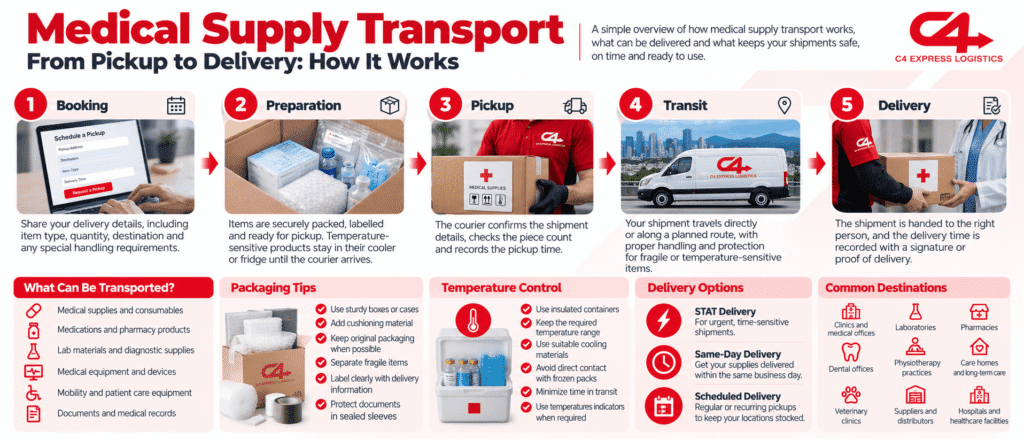
How Medical Supply Transport Works
Although delivery requirements vary, most medical supply shipments follow a similar process.
1. Booking
The healthcare provider or sender arranges a pickup and shares the shipment details, including the type of items, quantity, destination, and required delivery time. Any special handling instructions should also be provided at this stage.
2. Preparation
Before pickup, supplies should be properly packed, labelled, and ready for transportation. Fragile items need adequate protection, while temperature sensitive products require packaging suited to their storage requirements.
3. Pickup
The courier collects the shipment, confirms the relevant delivery details, and prepares it for transport. Accurate information helps prevent delays and ensures the shipment reaches the intended recipient.
4. Transit
Depending on the delivery service, shipments may travel directly to their destination or follow a scheduled route. Proper loading and handling help protect medical supplies from damage during transportation.
5. Delivery and Confirmation
Once the shipment arrives, it is handed over to the designated recipient. Delivery confirmation or proof of delivery provides a useful record for healthcare teams that need to track incoming supplies.
How Are Medical Supplies Packaged for Transport?
Proper packaging is one of the simplest ways to reduce the risk of damage during medical deliveries.
Whether you’re shipping routine supplies or delicate equipment, preparing everything before pickup helps make the delivery process smoother.
A few practical tips include:
- Choose sturdy packaging. Use strong boxes or protective cases that can withstand normal handling during transportation.
- Secure items inside the package. Bubble wrap, foam, or other cushioning materials can prevent movement and reduce the risk of damage.
- Keep original packaging when possible. Manufacturer packaging is often designed to protect specific devices and instruments.
- Pack fragile items separately. Glass containers, electronic devices, and delicate instruments should be protected from heavier items.
- Label shipments clearly. Include accurate delivery information and any relevant handling instructions.
- Protect important paperwork. Keep documents in sealed envelopes or sleeves to prevent damage.
For additional advice, check out our guide on how to ship fragile items safely.
Temperature Controlled Medical Supply Transport
Some medical products need to stay within a specific temperature range to remain safe and effective. Vaccines, insulin, certain medications, and laboratory reagents are common examples.
This is where temperature controlled medical supply transport becomes important.
For products that require refrigeration or other controlled conditions, maintaining the correct temperature throughout the journey helps protect their quality and integrity.
Common precautions include:
- Using insulated containers designed for the required temperature range.
- Choosing suitable cooling materials, such as gel packs, when recommended.
- Preventing direct contact between products and frozen packs when freezing could cause damage.
- Keeping packages away from direct sunlight and unnecessary heat exposure.
- Minimizing delays between pickup and delivery.
- Using temperature indicators or monitoring devices when required.
Healthcare providers should always follow the manufacturer’s storage and handling instructions.
If a shipment requires temperature control, confirm the requirements with the courier company before booking. Not every courier service has the equipment or procedures needed to transport temperature sensitive medical products.
Medical Equipment Transport: What Is Different?
Medical equipment transport often requires additional planning because devices can be fragile, expensive, or difficult to move.
Even relatively small equipment, such as diagnostic monitors or portable medical devices, may contain sensitive components that can be damaged by improper handling.
The transportation of medical equipment should begin with proper preparation.
Before arranging a pickup:
- Turn off equipment and follow the manufacturer’s transportation instructions.
- Remove or secure detachable accessories, cables, and probes.
- Use the original packaging or a protective case whenever possible.
- Add appropriate cushioning to prevent movement during transit.
- Record the equipment’s condition and serial number when necessary.
- Confirm the dimensions and weight of larger items before booking.
For heavier or oversized equipment, it’s important to check whether the courier has a suitable vehicle and can accommodate the shipment safely.
STAT, Same Day and Scheduled: Choosing the Right Delivery Type
Not every medical delivery needs the same level of urgency.
A clinic waiting for essential supplies may need an urgent pickup, while a pharmacy restocking another location might prefer a regular delivery schedule.
Understanding the available options helps healthcare providers choose a service that fits their needs.
- STAT Delivery: Immediate dispatch for urgent shipments. The courier is sent right away and travels directly to the destination.
- Same Day Delivery: Suitable for medical supplies, documents, or equipment that need to reach their destination within the same business day.
- Scheduled Delivery: A practical option for planned pickups, regular supply transfers, and recurring deliveries between healthcare locations.
Many healthcare businesses use a combination of these services. Scheduled routes help manage routine deliveries, while same day and STAT options provide flexibility when unexpected needs arise.
Who Uses Medical Supply Transport?
Medical supply transport supports more than hospitals and large healthcare facilities. Many smaller healthcare businesses also depend on regular deliveries to keep their operations running.
Some common examples include:
- Clinics and medical offices: Receiving supplies and transferring items between locations.
- Laboratories: Moving collection kits, diagnostic materials, and laboratory supplies.
- Pharmacies: Transporting medications, pharmacy stock, and prescriptions to patients or care facilities. Learn more about our pharmacy courier service.
- Dental offices: Sending instruments, dental materials, and items between clinics and laboratories.
- Physiotherapy practices: Receiving equipment and supplies needed for patient appointments.
- Long term care homes: Coordinating medication deliveries and regular restocking.
- Veterinary clinics: Transporting medical supplies, medications, and diagnostic materials.
Whether it’s a scheduled delivery or an urgent request, reliable transportation helps these businesses stay organized and avoid unnecessary interruptions.
Common Challenges and How to Avoid Them
Medical deliveries can become complicated when important details are overlooked. Fortunately, many common issues can be prevented with better preparation and communication.
Late Deliveries
Unexpected delays can affect appointments, procedures, and daily operations. Whenever possible, book shipments in advance and clearly communicate any delivery deadlines.
Damage During Transit
Fragile equipment and medical supplies need suitable packaging. Using sturdy containers and securing items properly can help prevent damage during transportation.
Temperature Issues
Temperature sensitive products require extra attention. Always confirm storage requirements, use appropriate packaging, and arrange suitable transportation before sending these shipments.
Missing Delivery Information
An incorrect address, missing contact number, or unclear delivery instructions can cause avoidable delays. Double check all shipment details before pickup.
Lack of Delivery Confirmation
Knowing when a shipment arrived is especially important for healthcare businesses. Request proof of delivery when documentation is needed for internal records or shipment tracking.
Checklist: Preparing a Medical Supply Shipment
Before scheduling your next medical supply delivery, use this checklist to make sure everything is ready.
- Confirm that all items are securely packed and sealed.
- Use protective packaging for fragile equipment and materials.
- Clearly identify any special handling or temperature requirements.
- Verify the recipient’s name, address, and contact information.
- Include any required documents or delivery instructions.
- Confirm that someone will be available to receive the shipment.
- Check that the number of packages matches the booking details.
Taking a few minutes to review these details can help prevent delays, reduce handling issues, and make the delivery process easier for everyone involved.
Frequently Asked Questions
Medical supply transport often involves additional handling requirements, tighter delivery schedules, and more detailed coordination. Depending on the shipment, items may need protective packaging, temperature control, or specific delivery instructions.
Yes. Many types of small and medium medical equipment can be transported by courier, provided they are properly packaged and meet the courier’s size, weight, and handling requirements. Larger or specialized equipment may require additional arrangements.
Delivery times depend on the service selected, pickup location, destination, and shipment requirements. Same day courier services are designed for deliveries within the same business day, while STAT options prioritize urgent requests. Scheduled services follow prearranged delivery times.
Provide the pickup and delivery addresses, contact details, number of packages, approximate dimensions and weight, and preferred delivery time. You should also mention fragile items, temperature requirements, or any other special handling instructions.
Medical Supply Transport in the Lower Mainland
Healthcare providers across the Lower Mainland need delivery services they can depend on, whether they’re restocking supplies, transferring medical equipment, or arranging an urgent shipment.
Based in Burnaby, BC, C4 Express Logistics provides medical courier services for clinics, pharmacies, laboratories, dental offices, physiotherapy practices, care facilities, and other healthcare businesses.
Our delivery coverage includes Vancouver, Burnaby, Surrey, Richmond, Coquitlam, New Westminster, Delta, and Langley.
From same day deliveries to STAT requests and recurring routes, we help healthcare businesses coordinate shipments around their schedules and operational needs.
Need a reliable courier for your medical supplies?
Explore our medical courier services or contact C4 Express Logistics today to request a quote.