
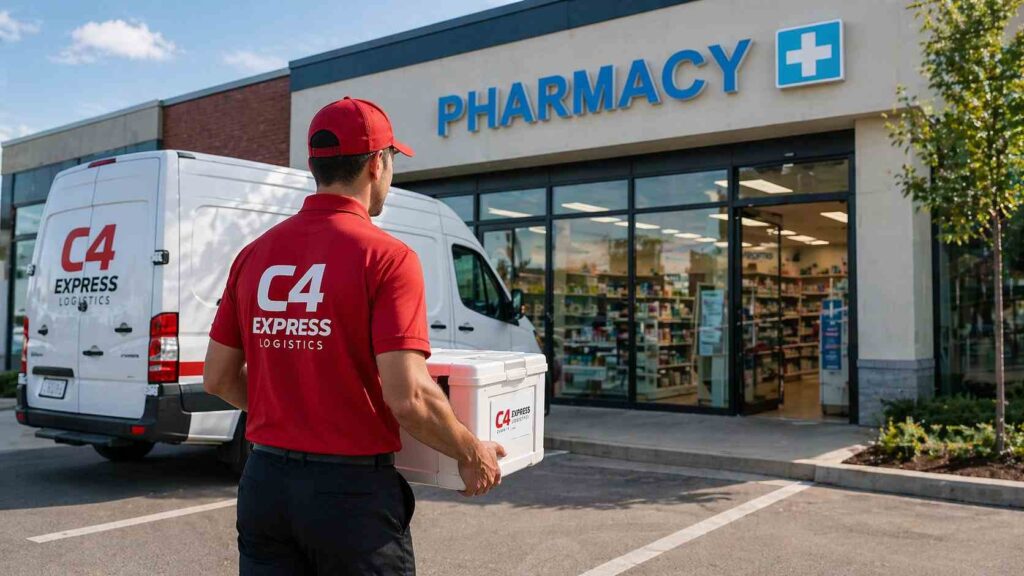
Medical pick-up and delivery service matters for businesses that depend on fast, organized, and reliable local coordination. In healthcare-related operations, even a routine pickup or drop-off can affect how smoothly the day moves.
That is why these deliveries often require more than standard parcel service. Businesses may need better timing, clearer visibility, and support for recurring or time-sensitive requests.
Across the Lower Mainland, a well-structured regional delivery setup can make that process more consistent and easier to manage.
What is a medical pick-up and delivery service?
A medical pick-up and delivery service is a local delivery solution for businesses that need to move healthcare-related items with more coordination and consistency than a standard shipment usually requires. It often supports scheduled pickups, routine drop-offs, and time-sensitive requests that are part of daily operations.
What makes this kind of service different is not just speed, but the level of operational support behind it. Businesses may need more predictable timing, clearer handoffs, and confirmation that each pickup or delivery was completed properly.
For clinics, pharmacies, suppliers, and other healthcare-related operations, that added structure can make local delivery more dependable and easier to manage over time.
What sets it apart from a standard delivery service?
A standard delivery service may be enough for a basic shipment, but healthcare-related operations often need more visibility and better control. When pickups are recurring or tied to a set routine, the delivery process needs to work as part of the operation, not as a separate task.
That is why many businesses look for a service that can support scheduled routes, reliable communication, and a more consistent local workflow.
Which businesses typically need this kind of service?
Many businesses benefit from this kind of support when local pickups and deliveries are part of daily operations rather than occasional shipping. The need usually comes from environments where timing, coordination, and repeat service matter from one day to the next.
That can include clinics, pharmacies, medical suppliers, laboratories, and other healthcare-related businesses that move items between locations on a regular basis. Some need fixed pickup schedules, while others need a service that can adapt when local requests change during the day.
What these businesses often share is the need for a delivery process that feels dependable, not improvised. When pickups support appointments, inventory movement, or coordination between sites, a more structured local service becomes much easier to work into the routine.
Why recurring pickups and scheduled routes matter
Recurring pickups and scheduled routes help businesses avoid handling each delivery as a separate request. When the process already fits the routine, day-to-day coordination becomes simpler and more efficient.
That consistency also makes planning easier. Businesses can work around clearer pickup windows, more predictable route patterns, and a delivery setup that supports the wider workflow instead of interrupting it.
Why reliability matters more in healthcare-related deliveries
In healthcare-related operations, delivery reliability matters more because pickups and drop-offs often support an active workflow rather than a one-time shipment. When timing becomes inconsistent, the issue is not limited to the delivery itself. It can also make planning harder for the business, depending on it.
That is especially true for businesses that rely on coordination between locations, scheduled activity, or repeat movement throughout the week. In those cases, a delivery service needs to feel dependable, easy to work into the routine, and consistent enough to support daily operations without creating extra friction.
Why delivery delays can create wider operational problems
A delay does not always affect just one pickup or one drop-off. In many cases, it can create problems across the rest of the day by forcing teams to adjust schedules, respond to uncertainty, or work around items that were expected to arrive on time.
Even small delays can become more disruptive when visibility is limited. Businesses may need to spend extra time following up, changing plans, or managing around a delivery that no longer fits the original schedule.
That is why reliability often matters as much as speed. A service that is easier to track, easier to plan around, and more consistent over time can help reduce disruption and support smoother daily coordination.
What businesses should look for in a regional delivery partner
When healthcare-related pickups and deliveries are part of daily operations, businesses usually need more than simple availability. A regional delivery partner should be predictable, well-organized, and able to support regular coordination without creating unnecessary follow-up.
Some of the most important things to look for include:
- Clear tracking and delivery visibility
- Proof of delivery for completed handoffs
- Support for recurring pickups and scheduled routes
- Consistent communication when timing changes
- Strong familiarity with local routes and service areas
These are the factors that make deliveries easier to plan around from one day to the next. The right pickup and delivery service does more than complete the route. It helps the business maintain a steadier and more manageable local workflow.
Why tracking and proof of delivery matter
Tracking and proof of delivery give businesses a clearer view of what is happening before, during, and after each handoff. That visibility becomes especially useful when deliveries are tied to internal coordination, repeat schedules, or items that need reliable confirmation once they arrive.
Without that level of visibility, teams may need to spend more time checking status, following up, or confirming whether a pickup or drop-off was completed as expected. A more transparent process reduces uncertainty and makes the service easier to manage as part of daily operations.
Why local route familiarity makes a difference
Local route familiarity can make a meaningful difference when deliveries move between clinics, pharmacies, suppliers, businesses, and other locations across the same region. A provider that already knows the service area is often better prepared to handle route planning, timing expectations, and recurring local coordination.
That becomes even more useful when deliveries are part of an ongoing routine rather than occasional requests. In a regional market, local familiarity can help support smoother execution and more dependable day-to-day service.
Why regional coverage matters for healthcare-related deliveries in the Lower Mainland
Healthcare-related deliveries often move between nearby locations, repeat routes, and local business hubs rather than across distant regions. Because of that, regional coverage can be more valuable than broad reach when businesses need dependable local coordination.
That is especially true across the Lower Mainland, where deliveries may move between areas such as Vancouver, Richmond, Burnaby, Surrey, and other connected service zones. When a provider already operates consistently across the region, it becomes easier to support day-to-day movement with fewer disruptions and better continuity.
A more structured approach to healthcare-related pickups and deliveries
For businesses that rely on healthcare-related pickups and deliveries, a more structured delivery setup can make local coordination easier to manage. Instead of treating every request as a separate task, businesses often benefit from a service that can support recurring routes, clearer visibility, and more consistent day-to-day execution.
In the Lower Mainland, that kind of structure can be especially useful for businesses that depend on regular movement between locations. A provider with an established regional operation is often better prepared to support that flow across the area with greater consistency.
This is where C4 Express Logistics fits naturally into the discussion. With:
- A company-owned van fleet
- Dedicated runs
- Same-day service for orders placed before 10 am
- After-hours delivery
- Digital tools such as tracking, proof of delivery, and waybills
The company supports businesses that need a more organized regional delivery process across the Lower Mainland.
Conclusion
A medical pick-up and delivery service matters most when pickups and deliveries are part of a broader workflow, not just isolated requests. In those situations, businesses usually need a service that is reliable, easier to plan around, and better aligned with the pace of local operations.
Across the Lower Mainland, that is where a structured regional provider can make a meaningful difference. With a company-owned van fleet, dedicated runs, same-day service for orders placed before 10 am, and digital tools that support visibility and proof of delivery, C4 Express Logistics supports healthcare-related pickup and delivery needs with a more structured regional approach.