
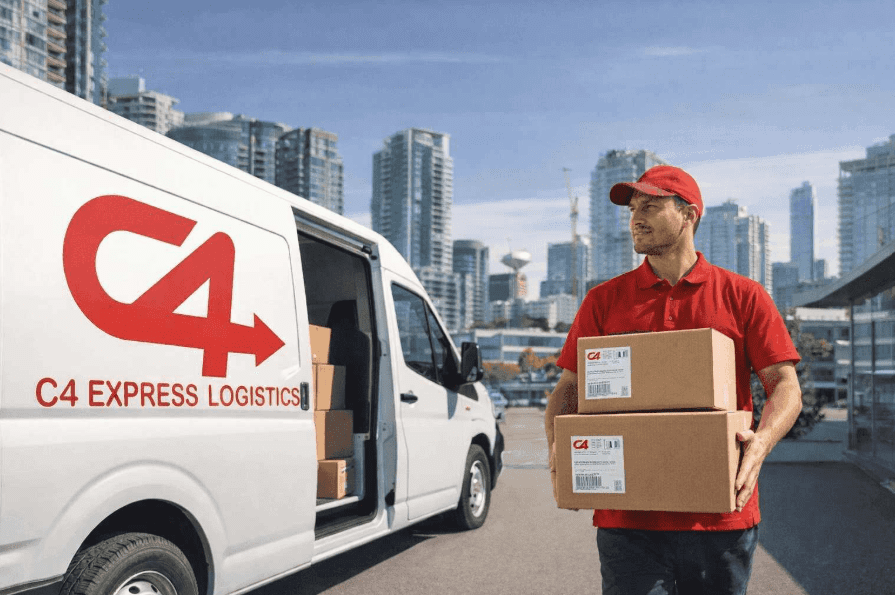
Commercial parcel delivery is no longer just a support service. In the Lower Mainland, it has become an important part of how businesses keep their operations running smoothly.
Urban density, concentrated commercial activity, and growing expectations for faster deliveries have changed the way companies manage logistics. Delivery timelines now influence workflow stability, client relationships, and even revenue cycles.
For businesses that depend on recurring shipments, same-day dispatch coordination, or time-sensitive documents, parcel transportation directly affects day-to-day operations. In this environment, reliability and predictability are not just advantages; they are essential for maintaining continuity.
This is where structured regional logistics makes a real difference.
What is commercial parcel delivery in a B2B context?
In a business environment, commercial parcel delivery refers to transportation services designed specifically for shipments between companies.
Unlike consumer shipping, B2B parcel logistics often includes:
- Recurring pickups
- Scheduled dispatch windows
- Proof of delivery requirements
- Documented tracking
- Clearly defined service parameters
For many organizations, parcel movement becomes part of the daily workflow. Inventory transfers, document exchanges, supply replenishment, and warehouse-to-store distribution all depend on consistent regional transport.
When deliveries support internal processes, inconsistency can create problems. Delays may disrupt supply chains, create bottlenecks, and affect commitments made to clients.
Because of this, many companies in the Lower Mainland treat courier services as part of their operational infrastructure rather than occasional support.
Commercial parcel delivery in the Lower Mainland: regional dynamics
The Lower Mainland presents unique logistical conditions.
High-density corridors, bridge crossings, and concentrated business districts require careful route planning. Cities such as Vancouver, Richmond, Surrey, Coquitlam, and Langley experience predictable traffic fluctuations that can directly affect delivery windows.
In practice, route coordination needs to consider:
- Urban congestion
- Peak-hour traffic patterns
- Industrial zones with heavy vehicle flow
- Time-sensitive commercial districts
Because many shipments move within the region rather than across provinces, intra-regional efficiency becomes especially important. Poor routing decisions don’t just delay parcels; they can affect entire operational timelines.
For businesses that rely on rapid turnaround, defined same-day dispatch windows can support urgent needs without disrupting broader route planning. When integrated into daily operations, same-day delivery becomes a structured capability rather than a last-minute solution.
Local familiarity with the region therefore, becomes a key advantage.
The role of route optimization in commercial parcel delivery
In dense metropolitan regions, route optimization plays a central role in delivery reliability.
Efficient routing reduces unnecessary mileage, improves timing consistency, and supports predictable service commitments. It also helps reduce operational variability, which is often one of the hidden challenges in last-mile logistics.
When delivery operations rely on van-based fleets working within a defined regional footprint, coordination becomes easier. Service areas remain controlled, and dispatch forecasting becomes more accurate.
For commercial clients, that predictability means fewer disruptions and more stable internal scheduling.
Operational structure behind reliable commercial parcel delivery
Reliable commercial parcel delivery depends on well-organized operations.
A controlled fleet operating within the Lower Mainland allows for tighter coordination and clearer accountability. Defined service zones reduce uncertainty, and standardized pickup procedures help maintain consistent scheduling.
Beyond the physical movement of parcels, modern delivery services increasingly rely on digital infrastructure. Structured systems often include:
- Electronic waybills
- Digital proof of delivery
- Centralized tracking access
- Order history visibility
- Integrated invoicing records
These tools offer more than simple transparency. They help reduce administrative workload and simplify shipment management.
Managers responsible for recurring deliveries benefit from immediate access to documentation and confirmation records. Instead of relying on manual follow-ups, teams gain centralized visibility into parcel movement.
For organizations with consistent shipping volume, dedicated delivery runs can further align logistics with operational cycles. Fixed pickup schedules and predictable dispatch times help reduce internal coordination efforts.
In the end, reliability comes not only from vehicles on the road but from a well-structured operational system.
Business impact: supporting measurable performance
Commercial parcel delivery can influence several measurable business outcomes.
Operational continuity
Consistent parcel movement helps prevent workflow interruptions. Scheduled pickups and predictable routing reduce bottlenecks in supply chains and inter-office coordination.
For companies with daily shipping needs, this continuity supports more stable service delivery.
Cost predictability
Reactive logistics often leads to emergency shipments, redundant dispatches, and unpredictable costs.
Structured regional delivery services help companies plan more effectively. Defined service parameters, such as weight-based pricing and clearly established service areas, contribute to better budgeting and financial predictability.
Over time, this clarity helps strengthen procurement planning and cost control.
Administrative efficiency
Digital confirmation systems simplify internal reporting. Proof of delivery records and centralized tracking reduce the time spent verifying shipments.
For operations managers, visibility replaces uncertainty.
Competitive responsiveness
In a competitive regional market, the ability to send products or documentation quickly strengthens service-level commitments.
Reliable parcel logistics supports business reputation, responsiveness, and long-term client relationships.
Strategic sectors that depend on commercial parcel delivery
Commercial parcel delivery supports many industries across the Lower Mainland, but some sectors rely more heavily on structured regional logistics.
Healthcare-related operations
Pharmacies, clinics, laboratories, and medical suppliers often require recurring deliveries and documented handoffs.
Predictability and traceability are essential for maintaining operational continuity. While courier services typically support multiple sectors, healthcare operations frequently require higher levels of coordination and reliability.
E-commerce and retail distribution
Local e-commerce businesses depend on efficient last-mile execution to meet customer expectations.
Regional parcel services give companies greater flexibility when operating fulfillment centers within metropolitan areas. Faster intra-regional movement can help businesses stay competitive without relying entirely on national carriers.
Wholesale and urban supply chains
Distributors frequently require warehouse-to-store transfers, inventory balancing, and recurring shipment cycles.
In dense urban environments, last-mile delays can affect retail timelines and stock availability. Structured commercial parcel services help maintain a steady flow of goods.
Professional and corporate services
Legal, financial, and corporate offices continue to rely on secure and documented parcel movement across municipalities within the Lower Mainland.
Even in highly digital environments, physical documentation still plays an important operational role.
Conclusion
Commercial parcel delivery plays a critical role in supporting business operations across the Lower Mainland. In a region defined by urban density, active commercial hubs, and time-sensitive workflows, reliable last-mile logistics is essential.
Businesses that depend on recurring shipments and predictable regional transportation benefit from consistent execution and clear operational visibility.
By providing van-based, regionally focused courier services, C4 Express Logistics supports companies throughout the Lower Mainland with optimized routing, structured dispatch processes, and dependable parcel movement. In a competitive and fast-moving business environment, reliable commercial parcel delivery becomes a real operational advantage.