
Agile delivery has become a fundamental requirement for companies operating in fast-paced, competitive markets. As customer expectations evolve and delivery timelines become increasingly compressed, traditional logistics models struggle to keep up. Fixed routes, rigid schedules, and limited adaptability often result in delays, inefficiencies, and dissatisfied customers.
In this context, agile delivery is no longer a trend or optional upgrade. It is a core logistics strategy that enables businesses to respond quickly, maintain reliability, and operate efficiently in dynamic urban and regional environments.
Understanding agile delivery in logistics
In logistics, agile delivery refers to the ability to adapt delivery operations quickly without disrupting the entire supply chain. This includes responding to last-minute changes, adjusting routes in real time, handling fluctuating delivery volumes, and accommodating urgent or on-demand requests.
Agile delivery prioritizes responsiveness, speed, and flexibility over rigid planning. Instead of relying on static schedules, agile logistics models focus on continuous adjustment and operational adaptability.
Why agile delivery is critical for modern business operations
Modern businesses operate in environments shaped by constant change. Traffic congestion, weather conditions, customer availability, and sudden order modifications are daily realities. Logistics systems that lack agility struggle to respond efficiently to these challenges.
Without agile delivery, companies often experience:
- Missed delivery windows
- Delayed shipments
- Higher operational costs
- Reduced customer satisfaction
- Limited ability to scale operations.
Agile delivery allows businesses to maintain service quality even when conditions are unpredictable.
The growing role of agile delivery in urban logistics
Urban environments place unique pressure on logistics operations. Dense traffic, restricted access zones, limited parking, and strict delivery hours significantly reduce the efficiency of traditional delivery models.
Large vehicles operating on fixed routes are often poorly suited to urban logistics. Agile delivery solutions, particularly those using smaller vehicles, allow companies to navigate cities more efficiently, reduce delays, and improve overall delivery performance.
Flexibility as the foundation of agile delivery
Flexibility is the defining characteristic of agile delivery. A flexible logistics operation can reroute vehicles, reschedule deliveries, and prioritize urgent shipments without interrupting the entire workflow.
This flexibility reduces downtime, minimizes the impact of disruptions, and allows businesses to respond proactively rather than reactively. Agile delivery models are designed to adjust continuously as conditions change.
Agile delivery and last-minute operational changes
One of the biggest advantages of agile delivery is the ability to handle last-minute changes effectively. Customer requests may shift, delivery locations can change, or priorities may be updated throughout the day.
Traditional logistics models struggle with these changes, often requiring manual intervention or full schedule revisions. Agile delivery systems, however, are built to absorb changes smoothly, keeping operations running efficiently.
Why van-based courier services enable agile delivery
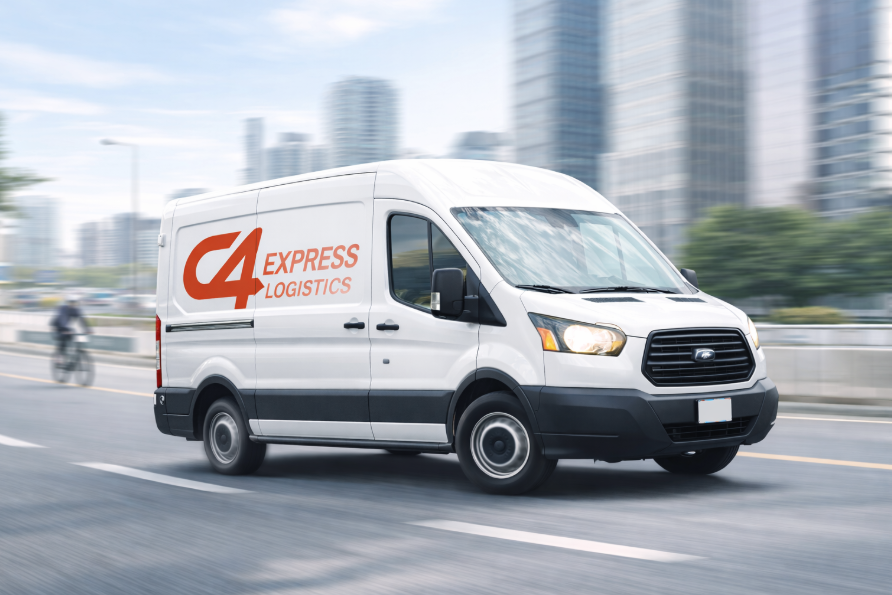
Van-based courier services play a central role in agile delivery strategies, especially in urban and regional markets. Vans offer greater mobility, easier access to restricted areas, and faster maneuverability compared to larger vehicles.
Key advantages of van-based agile delivery include:
- Faster route adjustments in real time
- Improved access to dense urban locations
- Reduced delays caused by traffic congestion
- Efficient handling of short-distance and same-day deliveries
These characteristics make vans ideal for logistics operations that require speed and adaptability.
Agile delivery and same-day service expectations
Same-day delivery expectations continue to rise across industries such as retail, construction, healthcare, and professional services. Meeting these expectations requires a logistics model that can process, dispatch, and deliver shipments within extremely tight timeframes.
Agile delivery supports same-day services by enabling quick decision-making, optimized routing, and efficient vehicle deployment. Without agility, same-day delivery becomes costly and unreliable.
Managing peak demand with agile delivery
Demand fluctuations are a common challenge in logistics. Seasonal spikes, promotional periods, and unexpected surges in orders can overwhelm rigid delivery systems.
Agile delivery models allow businesses to scale operations more effectively during peak demand periods. Flexible routing, dynamic scheduling, and adaptable fleet usage help maintain service quality even when volumes increase rapidly.
How C4 Express supports agile delivery
C4 Express Logistics is designed to support agile delivery through a flexible, van-based courier network. Its operations prioritize speed, adaptability, and urban efficiency, enabling businesses to respond quickly to changing delivery requirements.
By focusing on regional and urban logistics, C4 Express helps companies maintain control over delivery timelines while reducing the operational complexity associated with rigid logistics models.
Reducing delays through agile delivery strategies
Delays are often the result of inflexible logistics systems that cannot adapt to real-world conditions. Agile delivery minimizes delays by allowing immediate responses to traffic changes, weather disruptions, and urgent delivery requests.
This proactive approach improves delivery reliability and protects customer relationships.
Agile delivery as a cost-control strategy
While agile delivery emphasizes speed and flexibility, it also supports cost efficiency. Optimized routing, reduced idle time, and fewer failed delivery attempts help lower overall logistics costs.
Agile delivery allows businesses to improve performance without increasing operational overhead or investing in costly infrastructure.
Supporting small and medium-sized businesses with agile delivery
Small and medium-sized businesses often lack the resources to operate dedicated delivery fleets. Agile delivery services provide access to professional logistics capabilities without high fixed costs.
By outsourcing to an agile courier provider, businesses gain flexibility, scalability, and reliability while focusing on core operations.
Building resilience through agile delivery
Agile delivery contributes directly to supply chain resilience. The ability to adapt quickly to disruptions strengthens logistics performance and reduces the impact of unexpected challenges.
Resilient delivery operations are better equipped to handle demand changes, environmental factors, and operational constraints.
Long-term benefits of adopting agile delivery
Over time, agile delivery improves customer satisfaction, enhances operational stability, and supports business growth. Companies that adopt agile logistics strategies are better positioned to compete in fast-moving markets.
Agile delivery transforms logistics from a constraint into a strategic advantage.
Conclusion
Agile delivery is essential for businesses operating in modern, urban, and customer-driven markets. Rigid logistics models can no longer meet the demands of speed, flexibility, and reliability required today.
Through flexible, van-based courier solutions, C4 Express enables agile delivery that helps businesses move faster, adapt to change, and maintain consistent delivery performance in dynamic environments.