
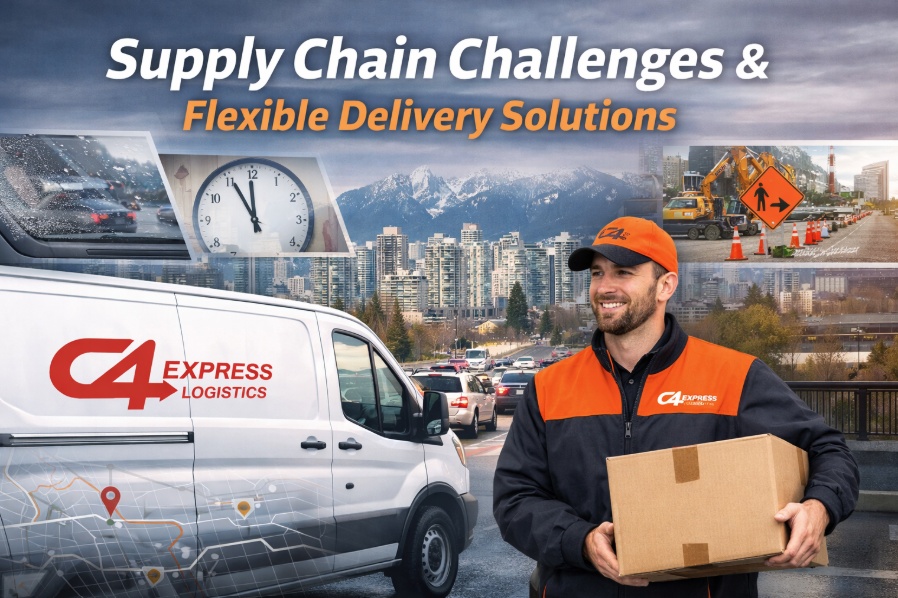
Supply chain challenges are no longer occasional issues. For many businesses, they are a daily reality that affects delivery timelines, operational costs, and customer satisfaction. While global supply chain disruptions often make headlines, the most persistent problems tend to occur at the local level, especially in urban and regional distribution.
Companies operating in fast-paced markets increasingly realize that solving supply chain challenges starts with improving how goods move during the final stages of delivery.
Understanding supply chain challenges beyond global disruptions
Supply chain challenges are often associated with international shipping delays or manufacturing shortages. In practice, however, many businesses experience disruptions much closer to their customers.
Common supply chain challenges include:
- Nissed delivery windows,
- Lack of adaptability when schedules change,
- Rising transportation expenses,
- Limited visibility over last-mile operations.
Even when inventory is available and orders are ready to ship, inefficient delivery models can disrupt the entire supply chain.
The growing pressure on last-mile logistics
The last mile is one of the most complex and expensive stages of the supply chain. It requires precision, speed, and flexibility, particularly in urban environments. Large vehicles may work well for long-haul transportation, but they often struggle in cities where traffic congestion, restricted access zones, and limited parking are constant challenges.
These limitations make last-mile delivery one of the biggest contributors to supply chain challenges, especially for businesses that rely on frequent or same-day deliveries.
Why urban environments intensify supply chain challenges
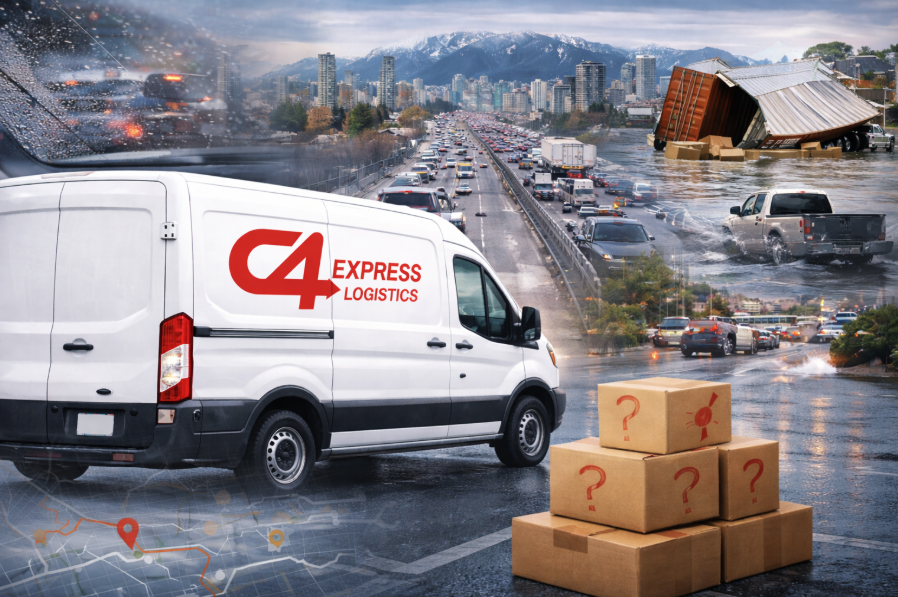
Urban logistics introduces variables that are difficult to predict. Traffic patterns change throughout the day, construction projects disrupt routes, and customer availability varies. In regions like British Columbia, these challenges are further compounded by weather conditions such as heavy rain or seasonal road hazards.
Without a flexible delivery strategy, even small disruptions can cascade into larger supply chain challenges, affecting multiple orders and customers.
The cost impact of inefficient delivery models
One of the most overlooked aspects of supply chain challenges is their financial impact. Delays increase labor costs, require rescheduling, and often lead to repeat delivery attempts. Over time, these inefficiencies significantly raise operational expenses.
Businesses that rely solely on rigid delivery structures, such as fixed routes or oversized vehicles, may find it difficult to control costs while maintaining service quality.
Lack of flexibility as a root cause of supply chain challenges
Many supply chain challenges stem from a lack of operational flexibility. Traditional logistics models are designed around predictability, but modern supply chains demand adaptability. When unexpected changes occur, rigid systems struggle to respond efficiently.
This lack of flexibility results in:
- Delayed order fulfillment
- Increased administrative workload
- Inconsistent delivery performance
Flexible delivery solutions are essential for minimizing these disruptions.
How van-based courier services address supply chain challenges
Van-based courier services offer a practical solution to many supply chain challenges, particularly in urban and regional settings. Vans can navigate city streets more easily, adjust routes quickly, and handle diverse shipment sizes efficiently.
Key advantages include:
- Faster response to route changes
- Improved access to dense urban areas
- Reduced delivery times for short distances
- Lower costs compared to larger vehicles
By improving last-mile efficiency, van-based services help stabilize the broader supply chain.
Same-day delivery and its role in reducing supply chain challenges
Customer expectations have shifted significantly in recent years. Same-day delivery is no longer a luxury for many industries; it is a competitive requirement. However, offering same-day service increases operational pressure and exposes weaknesses in the supply chain.
Flexible courier services make same-day delivery more achievable by reducing delays and improving route efficiency. This capability helps businesses meet customer expectations while minimizing supply chain challenges.
The role of C4 Express in overcoming supply chain challenges
C4 Express Logistics specializes in addressing supply chain challenges where they are most impactful: urban and regional delivery. By operating a van-based courier network, the company provides businesses with the flexibility needed to navigate complex logistics environments.
This approach allows companies to maintain consistent delivery performance, even during periods of fluctuating demand or unexpected disruptions.
Improving visibility and control in the delivery process
A lack of visibility is a common supply chain challenge. When businesses do not have clear insight into delivery status, planning becomes reactive rather than proactive. Flexible courier solutions improve control over delivery schedules and routes.
Greater visibility allows businesses to anticipate issues, communicate more effectively with customers, and adjust operations before small delays become major disruptions.
Reducing dependency on rigid logistics infrastructure
Another major supply chain challenge is overreliance on rigid infrastructure. Large distribution models are not always suitable for local or time-sensitive deliveries. By integrating van-based courier services, businesses can reduce dependency on inflexible systems.
This hybrid approach strengthens the supply chain by combining scalability with local adaptability.
Supporting small and medium-sized businesses
Small and medium-sized businesses often face disproportionate supply chain challenges due to limited resources. They may not have the capacity to invest in dedicated fleets or complex logistics systems. Flexible courier services provide access to professional delivery solutions without high upfront costs.
This enables growing businesses to compete more effectively while maintaining operational efficiency.
Local expertise as a competitive advantage
Local knowledge plays a crucial role in overcoming supply chain challenges. Understanding traffic patterns, delivery restrictions, and regional conditions allows courier services to operate more efficiently. Businesses benefit from faster response times and more reliable deliveries.
C4 Express leverages regional expertise to help clients navigate the unique logistics challenges of British Columbia.
Building resilience into the supply chain
Supply chain resilience is about preparing for disruption rather than reacting to it. Flexible delivery solutions contribute to resilience by allowing businesses to adapt quickly to changing conditions. This adaptability reduces downtime and protects customer relationships.
Resilient supply chains are better equipped to handle demand spikes, weather disruptions, and operational changes.
Long-term benefits of flexible delivery strategies
Addressing supply chain challenges is not just about solving immediate problems. Over time, flexible delivery strategies improve customer satisfaction, reduce costs, and enhance operational stability. Businesses that invest in adaptable logistics models are better positioned for long-term growth.
Efficient last-mile delivery strengthens the entire supply chain.
Conclusion
Supply chain challenges are an unavoidable part of modern business, but their impact can be significantly reduced through smarter delivery strategies. Focusing on flexibility, local expertise, and efficient last-mile solutions allows businesses to overcome disruptions and maintain reliable operations.
By providing dependable van-based courier services, C4 Express helps businesses reduce supply chain challenges and build more resilient, efficient logistics operations in demanding urban environments.